Blask Analytics: the Norwegian Market

Presenting an analysis of the Norwegian online gambling market, powered by Blask. Exclusively on G GATE MEDIA.
We are launching a new weekly feature supported by Blask’s iGaming analytics platform. In these weekly pieces, we’ll take a deep dive into the gambling market trends and the reasons behind them. Today, our analysis focuses on Norway.
In this piece, we discuss interest in gambling in general and in specific brands, leading iGaming operators, and market changes over the past year.
GEO Overview
The following is key data regarding Norway as of December 1, 2025:
- Population: ~5,5 mllion
- Population with internet access: ~5,5 million
- Language: Norwegian
- Average age: 40.8
- Legal operators: 1
- Total operators: 106
- Gambling status: regulated
- Regulator: the Norwegian Gambling and Foundation Authority (Lotteritilsynet)
Player Profile
Here is the player data reported by Blask in Beta mode, accurate as of August 2025.
Age groups:
- 18–24: 15%
- 25–34: 20%
- 35–44: 25%
- 45–54: 20%
- 55–64: 15%
- 65+: 5%
Income (NOK):
- Under 200k: 10%
- 200–400k: 20%
- 400–600k: 30%
- 600–800k: 25%
- 800k–1 million: 10%
- 1 million+: 4%
Primary motivation for sports betting and playing casino games:
- To earn money: 30%
- To win (regardless of money): 25%
- To pass the time: 20%
- To test my intuition: 15%
- To relax: 10%
Main platforms for iGaming brands’ touchpoints:
- Social networks: 50%
- Search engines: 45%
- YouTube: 40%
- Online advertising: 35%
- Mobile notifications: 30%
Demand for Gambling
The Blask Index is a metric that showcases interest across all gambling brands in a country. It’s based on attributed intent to interact with brands, inferred from user search activity. The chart covers the previous 12 months.
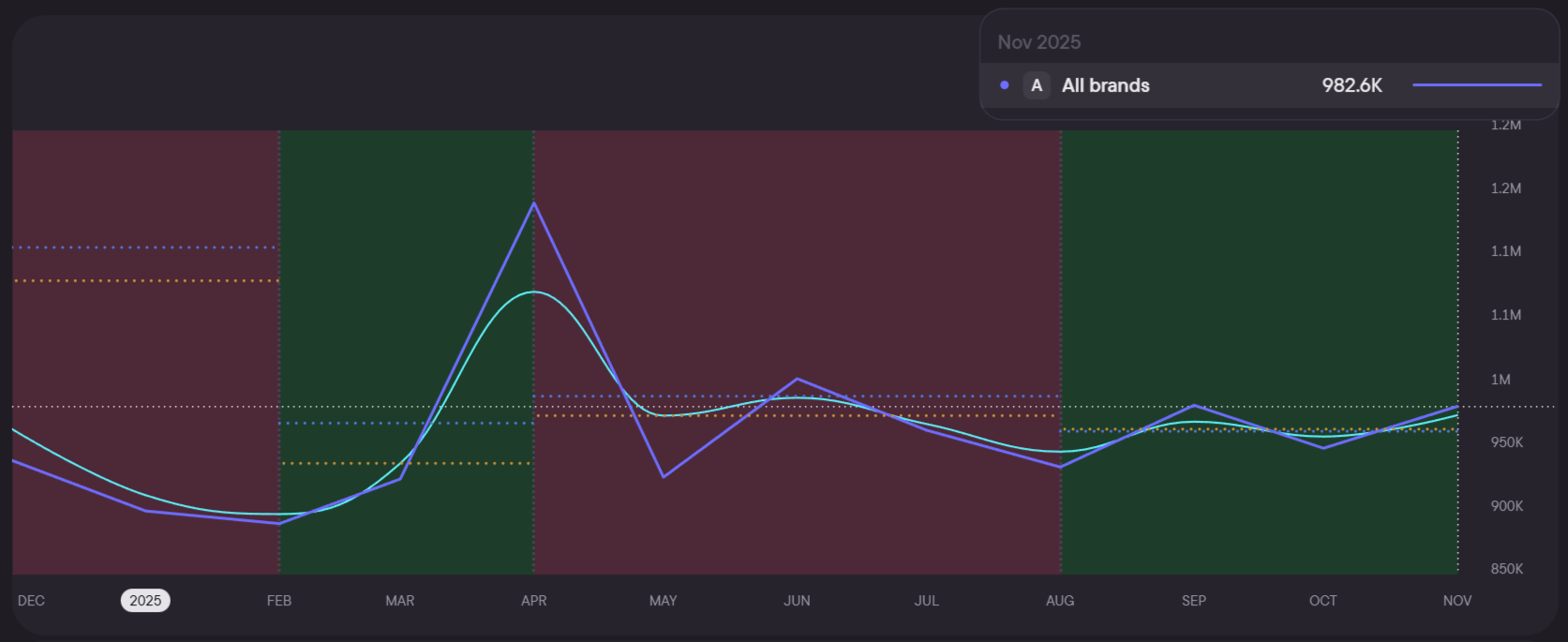
Norway’s Blask Index was 982.6K in November. In May 2025, the Lotteritilsynet began investigating Norsk Tipping after a bank reported a large amount transferred to the operator from a minor’s account. The regulator eventually fined the company and requested an explanation of how its age-verification and payment-monitoring systems are set up.
As early as June, the monopolist made another mistake. During a Eurojackpot draw, thousands of players received notifications that they’d “won millions”. Following these failures, the CEO of Norsk Tipping announced his resignation. The turmoil surrounding the country’s primary operator damaged the industry, as evidenced by a decline from 1.14 million to 934.7 thousand between April and August.
Besides, on the heels of these 2025 disasters, the authorities discussed replacing the existing monopoly model with the licensing of private operators, similar to what other Nordic countries have done. However, after the Labor Party won the election, changes in gambling legislation became highly unlikely. Norsk Tipping continues to operate as usual to this day.
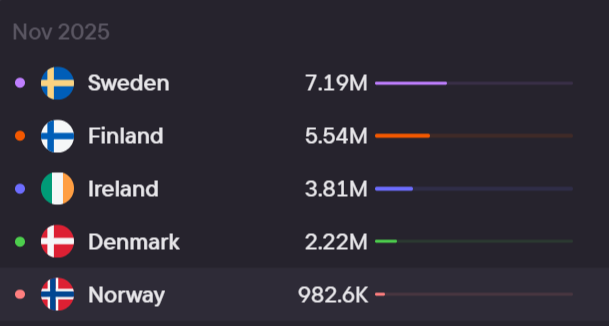
As for Norway’s Blask Index in November 2025, it lags behind the other Northern European countries: Sweden, Finland, Ireland, and Denmark. One reason for the gambling market’s stagnation is public monopoly.
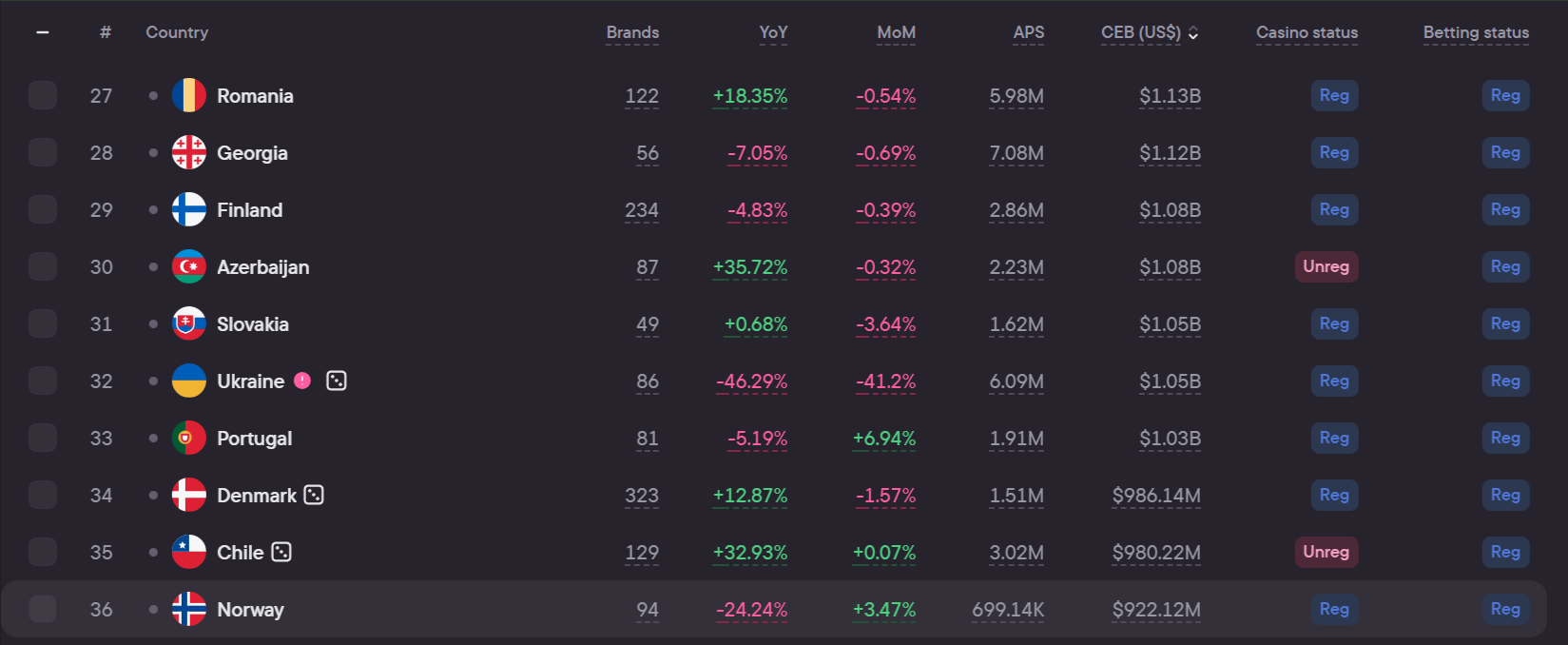
In the global list, Norway ranks 36th with projected annual online gambling earnings of $922.12 million.
Market Trends
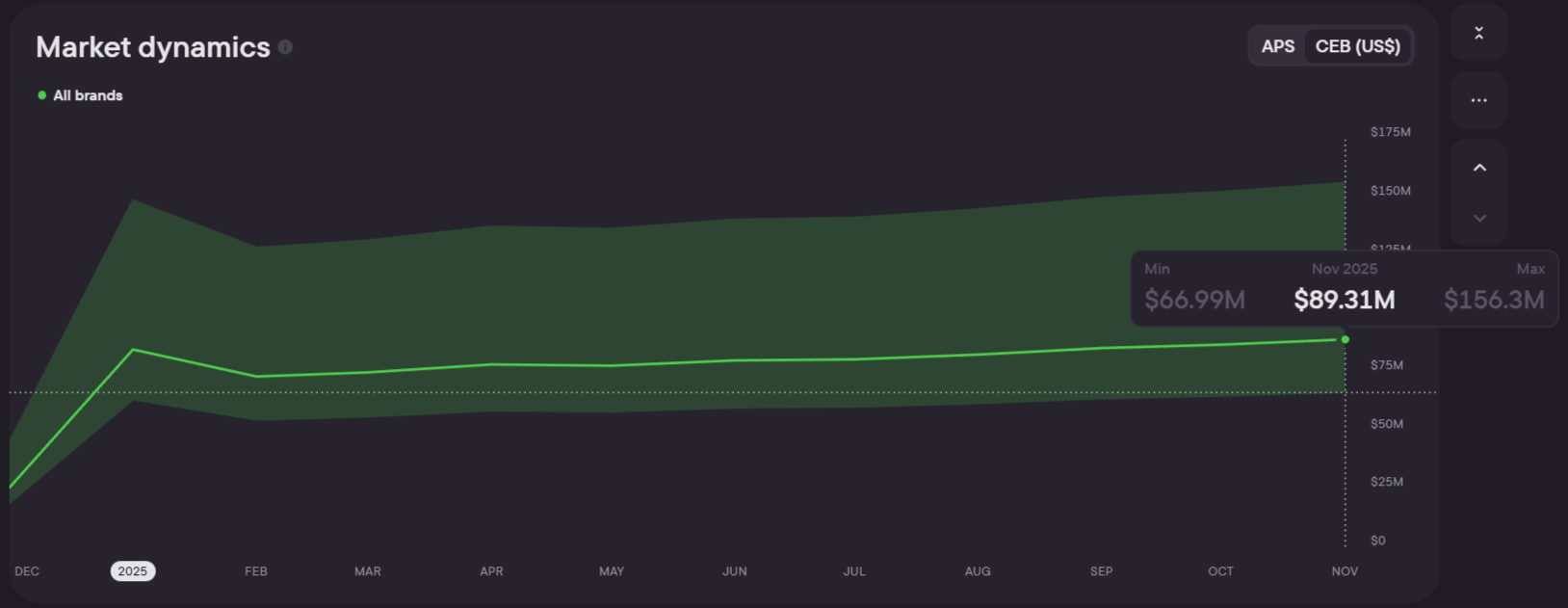
The Acquisition Power Score (APS) and Competitive Earning Baseline (CEB) measure the market performance.
APS is the projected number of customers. It’s calculated based on the number of projected customers for a completed month per brand.
CEB is the projected monthly earnings. It’s calculated as the projected monthly earnings per brand for a completed month.
These benchmarks are based on the hourly Blask Index and on public records. Besides, they are affected by external factors, such as politics, the economy, and sports events. Hence, the data is provided as a range.
In November, the projected gambling market earnings in Norway ranged from $66.99 million to $156.3 million. At the same time, the projected number of customers ranged from 44.64K to 104.2k people.
Market Leaders
A Brand’s Accumulated Power (BAP) shows a brand’s share in total customer interest. The chart covers the previous 12 months.
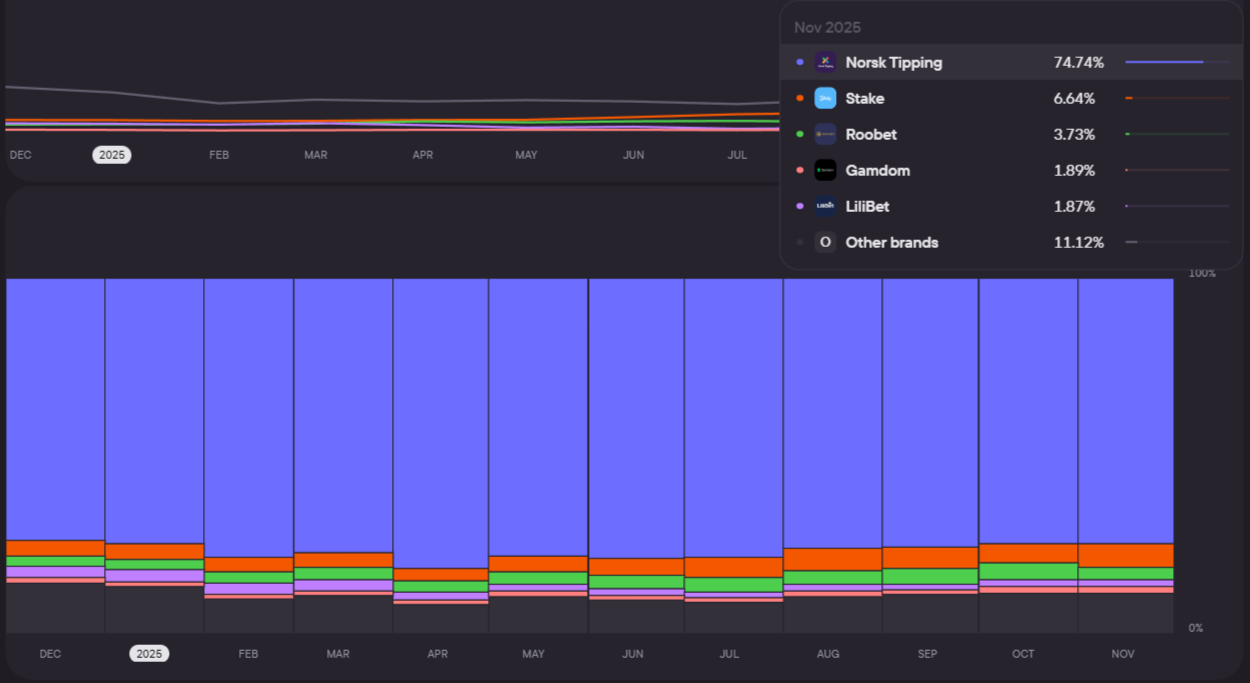
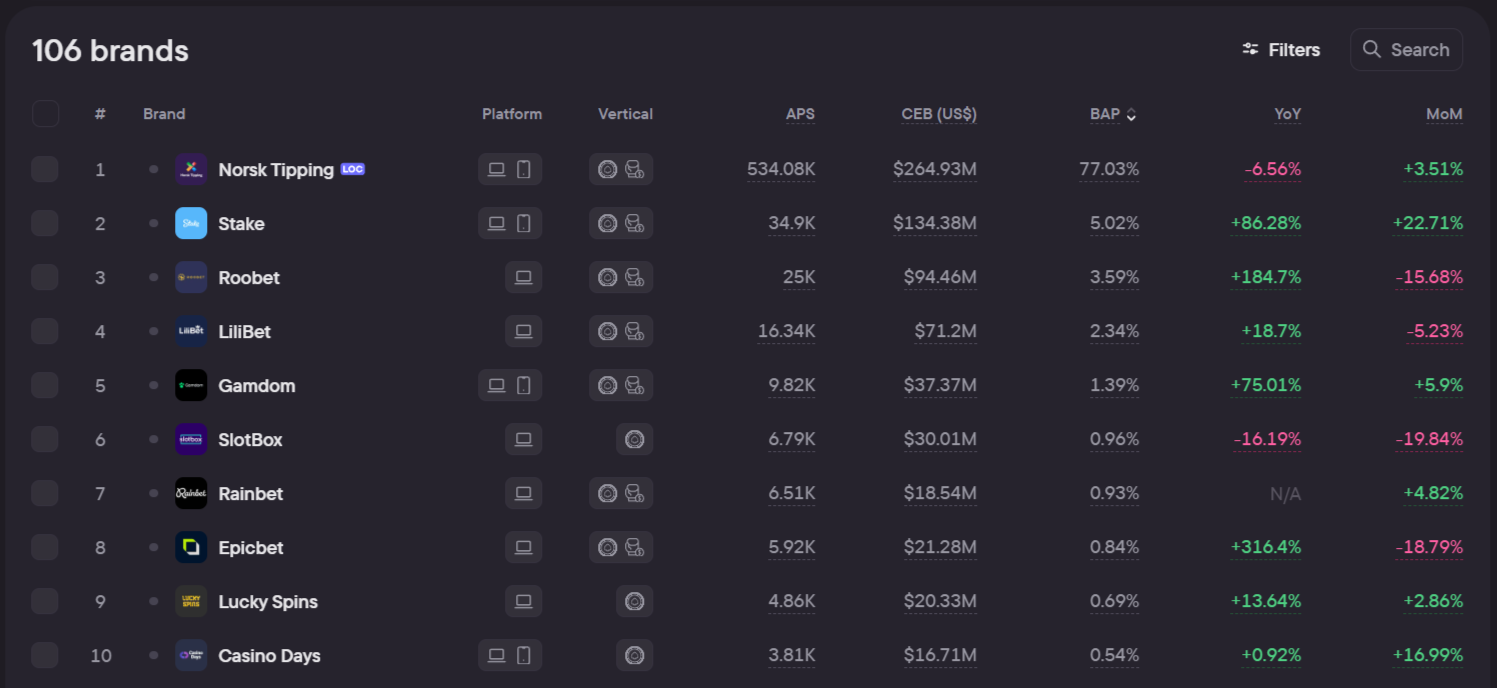
The top position in these rankings belongs to the only legal operator in the country, Norsk Tipping, with a 74.74% BAP in November. The brand also posted the following:
- APS: 534,08K
- CEB: $264.93 million
In 2025, the monopolist Norsk Tipping remained the most popular brand in the country. In the course of the year, its Blask Index dropped by 6.56%.
However, annual growth rates of other brands outperformed the leader. For instance, the value grew by 86.28% for Stake, the second-most-popular operator, which is currently illegal.
Seasonality and Active Gambling Days
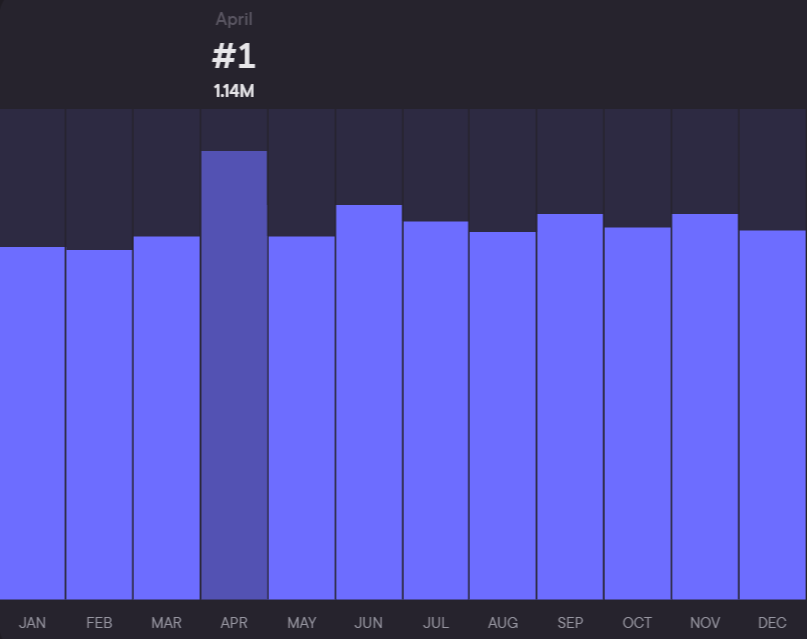
Seasonality accounts for the monthly volume of user activity. The chart is based on the Blask Index. The most active month in Norway was April, with a value of 1.14 million. This activity may be related to the male and female football championships held in April: the Eliteserien and the Norwegian Women’s Cup. The latter started on April 4, 2024.
The top five months were as follows:
- April
- June
- September
- November
- July
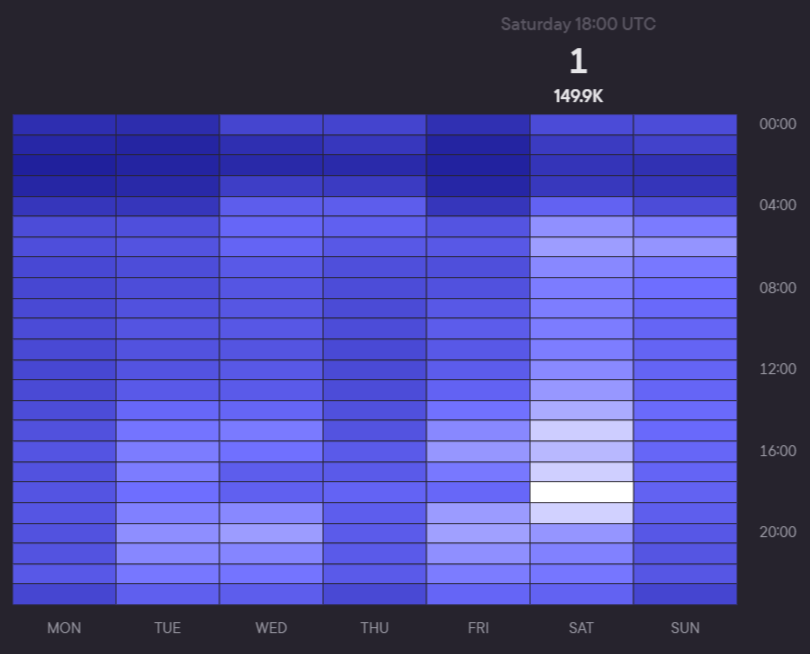
Player activity peaks in Norway on Saturday from 3 p.m. to 7 p.m. local time. Other days with high activity are Wednesday and Friday from 7 p.m. to 9 p.m.
The 12:00 a.m. to 3 a.m. period is the least active every weekday.
Conclusion
The gambling industry in the Scandinavian countries is gradually abandoning the monopolistic model. Denmark and Sweden have already implemented licensing for private operators. This decision has helped accelerate innovation in their local markets and expand the product line for the audience.
Unlike its neighbors, Norway is sticking to a public monopoly in iGaming, which obviously hinders market development. Despite Norsk Tipping’s steady leadership, user interest is stagnating, and the country’s Blask Index performance continues to trail that of other Northern European countries.
We can only draw a single conclusion: Norway’s market remains stable, but sluggish.