Casino.org: The History of the Very First Affiliate iGaming Website


Here is our overview of Casino.org, the project that started the history of online gambling.
Gambling projects worth your attention. This time, we look at one of the industry’s oldest resources: Casino.org. The website is rightly considered the pioneer of online gambling, having laid the foundation for what the industry has become.
In 1995, the site was launched as the first affiliate resource in history. It has been a 30-year journey from experimenting with online casinos to becoming an independent information source. Today, the platform continues to influence the tastes and preferences of millions of players, raising the bar in iGaming in many ways. In this piece, we will dive into the website’s history, the features its users enjoy, and the person behind it all.
The Website’s Beginnings
Warren Eugene of Toronto is credited with founding Casino.org. He is an entrepreneur passionate about gaming and gambling software development. The website was first conceived as a full-fledged HTML-based online casino. At that time, the project operated from the Caribbean islands – Turks and Caicos and Nassau, although Eugene himself was already living in the US at the time.
In a 1995 interview, he told Time Magazine that before he even managed to officially launch the website, about 7,300 players had already registered with the casino. The site offered 18 games and access to the National Indian Lottery. Even then, the project was considered to be one of the first serious attempts to bring gambling to the internet.
Two years later, the San Francisco Chronicle described Eugene as a pioneer of online gambling. The newspaper also reported that the Casino.org founder was in talks to possibly sell the business. The reason was a potential nationwide ban looming over online gambling.
Beyond that, no information has ever surfaced in open sources regarding any future developments or a possible sale of the website. This is why it’s unknown who exactly owns the Casino.org project now. Users speculate that it may be Palace Group.
In 2004, GlobeNewswire published a corporate press release by Warren B. Eugene. He was presented as the founder of online gambling. The businessman claimed that online gambling would become accessible all over the world and claimed he was the first to introduce this idea to the market in 1995.
Shortly after the launch, it became clear that the market needed not only new casinos but also honest information about them. In 2001, the website shifted its focus: rather than publishing games, it began listing reviews and recommendations based on real players’ experiences. This pivot made the website one of the benchmarks of the iGaming industry.
Meanwhile, a team of professionals played with real money and conducted blind tests at every casino. This approach established a reputation as an independent information source, rather than an advertising platform. This was exactly what players all over the world needed.
Following that transformation, the website went through a few more key stages:
- 2010: A separate category was added for mobile casino reviews.
- 2014: The team expanded internationally, and new offices dotted the globe.
- 2015: A news service was launched with reporters working worldwide.
Another milestone was its 2021 partnership with Vital Vegas, a specialized gambling blog founded by Scott Roeben in Las Vegas.
Rating Methodology
The Casino.org team uses a 25-step review process to rate online casinos. If a project meets all the criteria, the website recommends the casino to readers. Currently, their list includes 90+ approved casinos. This list is also regularly updated to remove unscrupulous websites. Here are the criteria for the rating system along with the weight each factor has in the overall score.
Bonuses, promotions, and customer service: account for 30% of the overall weight of the testing. When reviewing promotions, the team considers their transparency and the value the player receives. For customer care, the evaluation focuses on personal data protection, the convenience of communication channels, and response speed.
Security and trust: 20%. The website checks the following credibility indicators to make sure that the casino provides a secure service in compliance with all the applicable laws:
- A license
- An SSL encryption certificate
- Oversight by an independent regulator (such as eCOGRA)
If this data is missing from the casino’s website, the Casino.org team runs the games repeatedly to manually verify if the random number generator operates properly and that the outcomes are truly random.
Mobile convenience and localization: 20%. These factors affect the overall user experience. They include optimization for a variety of devices, as well as support for languages, currencies, and payment providers used in particular regions.
Game selection and quality software: 15%. Casino.org rates the variety of offerings available, whether they have progressive jackpots, how user-friendly the interface is, and the reliability of the gaming software. The team looks into the game providers as well. During testing, they prioritize suppliers like NetEnt, Playtech, and Microgaming.
Banking options and payout speed: 15%. The simplicity and speed of deposits and withdrawals are considered crucial, as are timely payouts.
Casino.org makes the following declaration on its homepage:
“We have remained the go-to resource for millions of players for over 30 years now due to not only our reviewing of casinos but also our holding them accountable. Every operator is anonymously tested using real money. We complete the entire real user journey – from the initial deposit to the gameplay. Any platforms that do not meet our strict criteria get added to our list of websites that are best to avoid.”
If a platform doesn’t meet the standards or poses a threat to the players, it is added to the “blacklist”.
Additional Features
Beyond the casino ratings and reviews they publish, the website provides other tools to site visitors:
- Gambling statistics: Global trends in the industry over recent years.
- International regulators: Information on licensing bodies and auditors around the world.
- iGaming directory: A section with guides on various gambling genres.
- Player assist: A compliant service for online casinos.
- Casino match: A platform selection tool based on player preferences, such as genres, payout speeds, dealer formats, or devices.
The team also monitors regulatory changes and tests responsible gambling tools. Casino.org is confident that this is the only way to give trustworthy recommendations and adhere to high standards.
Casino.org Today
Casino.org’s main office is currently located in Malta. The company employs a team of 15 authors who specialize in online gambling. They write reviews and analytical pieces on the gaming industry in different jurisdictions, including Canada, the US, Brazil, New Zealand, and the UK.
In addition to its English version, Casino.org also has Spanish, French, and German versions. They are available at the following URLs:
- France: casino.org/fr
- Germany: casino.org/de
- Spanish: casino.org/es
Here are a few examples of casino reviews on the Spanish version of the website:
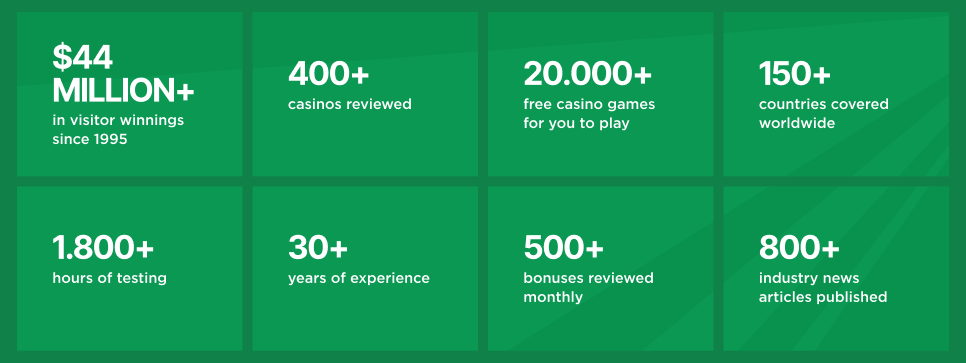
Casino.org in Numbers
According to Similarweb data as of July 2025, the domain was visited by more than 3.1 million users from numerous countries every month. Visitors are 58.1% male and 41.9% female. The largest visitor age group is 35-44 years old.
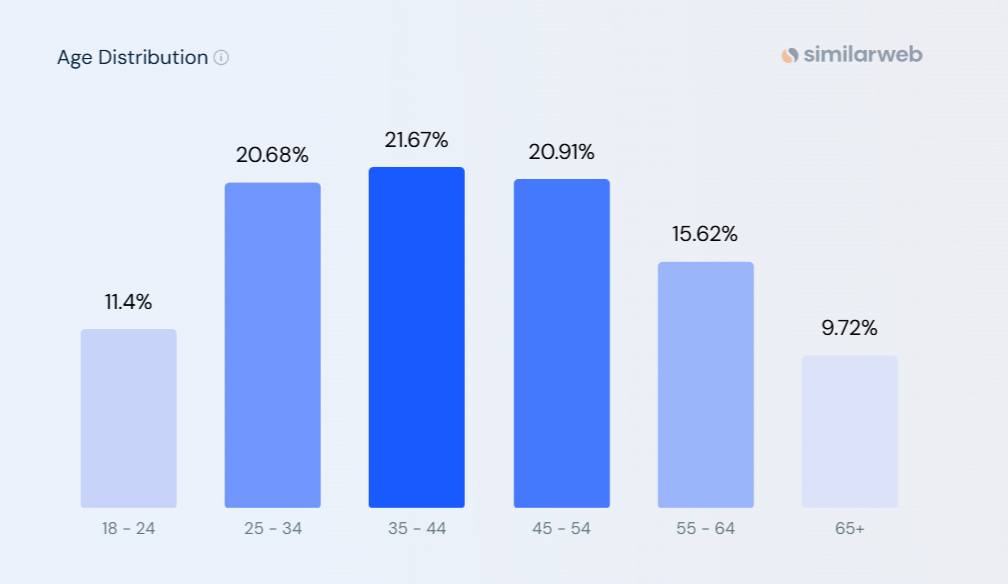
Website Reader Statistics. Source: similarweb.com
Top 5 GEOs where traffic comes from:
- USA: 47.4%
- Canada: 6.26%
- Germany: 6.05%
- France: 5.27%
- Netherlands: 2.43%
The remaining 32.6% comes from a variety of countries—direct traffic accounts for more than 50%, with organic visits making up 38.9%.
Conclusion
The history of Casino.org is not merely the chronicle of one single website. It actually shows the development of iGaming as an industry. In 30 years, the project has evolved from an experiment into an online casino and, eventually, a trusted resource for the entire world. The website continues to set standards for honest reviews and provides independent ratings. It also demonstrates how expertise, transparency, and technology can earn trust.