UK Gambling Commission Tax Hikes

Curbing Harm or Feeding the Black Market?
The cost of operating in the UK gambling market has just gone up, and the consequences will extend far beyond operator balance sheets. The UK government is increasing Gambling Commission license fees by 25% from October 2026 while also pursuing higher online gambling duties, placing fresh pressure on operator margins.
For large groups, it’s another cost to absorb. For smaller operators and affiliates, it raises a much bigger question: how much regulation can the licensed market absorb before competitive pressure shifts elsewhere?
Key Takeaways
- Remote Gaming Duty rises from 21% to 40% as of April 2026, while remote betting duty increases to 25% in 2027.
- The UK expects the reforms to generate more than £1 billion in annual tax revenue.
- Flutter moved Sky Bet’s betting business to Malta, while Entain booked a £488 million charge linked to the tax changes.
- The UKGC has created a dedicated Head of Illegal Markets role as concerns over offshore gambling continue to grow.
- Higher gambling taxes could accelerate market consolidation and widen the gap between licensed and offshore operators.
The UK’s New Gambling Tax Landscape
The UK government has increased the Remote Gaming Duty from 21% to 40%, so it’s clear that online gaming is bearing the brunt of the UK’s latest gambling tax reforms.
From April 1, 2026, the increase applies to online casinos, slots, and other remote gaming products offered to UK customers. According to the government, these products carry higher levels of gambling-related harm while also benefiting from lower operating costs.
We also noticed that remote betting receives different treatment. Rather than matching the 40% rate, the government will introduce a new 25% remote betting duty from April 1, 2027. Traditional betting shops are subject to the existing 15% rate, while UK horse racing betting retains its current treatment, as operators already contribute through the statutory Horserace Betting Levy.
Everything’s clearly laid out in this table:
| Duty | Current Rate | New Rate | Effective Date |
| Remote Gaming Duty | 21% | 40% | April 1, 2026 |
| Remote Betting Duty | 15% | 25% (remote only) | April 1, 2027 |
| UK Horse Racing (remote) | Existing treatment | Unchanged | / |
| Bingo Duty | Applies | Abolished | April 1, 2026 |
The main upside is that the government expects these reforms to raise more than £1 billion annually for public finances. At the same time, it hopes the higher duty will discourage operators from prioritising higher-risk gaming products.
We also think the decision to leave horse racing untouched reflects more than taxation. It’s one of Britain’s best-known sporting traditions, already supported by the statutory Horserace Betting Levy, and the government has repeatedly recognised its cultural and economic importance.
How Operators Are Responding to Higher Gambling Duties
Operators are already changing course. Flutter Entertainment has moved Sky Bet’s sports betting headquarters to Malta, where commercial and marketing decisions are now made. Tax expert Dan Neidle estimates the move could save the company £55 million annually, while Flutter has also announced around 250 UK job cuts as part of its efficiency plans.
Entain, owner of Ladbrokes and Coral, has taken a £488 million charge linked to the upcoming UK gambling tax changes. CEO Stella David warned the reforms could “damage our industry, stifle growth and open the door to those unlicensed operators.” She also expects consolidation, adding: “There will be fewer competitors over time… and we’ll be one of them.”
I think these examples make one thing clear: operators aren’t waiting for the new duties to arrive. They’re already restructuring their businesses to protect margins.
Next UKGC Tax Hike Up: Gambling Commission Licence Fees
From October 1, 2026, most Gambling Commission licence fees will increase by 25%, following a consultation by the Department for Culture, Media and Sport (DCMS). The government says the change is necessary to ensure the regulator can recover its costs and continue overseeing a complex gambling market.
The 25% uplift applies to most operating licences, application fees, first annual fees, personal licences, licence variations, and changes in corporate control. Society lotteries are exempt from the increase, while general betting (limited) licences will move to a new fee structure based on gross gambling yield (GGY) rather than days of operation.
| Fee Category | Change | Effective Date |
| Operating licence fees | +25% | October 1, 2026 |
| Application fees | +25% | October 1, 2026 |
| Personal licences | +25% | October 1, 2026 |
| Licence variations & corporate control | +25% | October 1, 2026 |
| Society lotteries | No change | October 1, 2026 |
What we find particularly interesting is that the government didn’t adopt any of the three consultation options exactly as proposed. Instead, it settled on a flat 25% increase, striking the right balance between funding effective regulation and limiting the financial burden on operators.
Is the UK Reducing Gambling Harm or Creating New Risks?
They are reducing risks on paper. The UKGC tax reforms have a clear objective: to reduce gambling harm while raising public revenue. That’s why online gaming now carries the highest duty, while lower-risk products receive lighter treatment.
But the concern is how operators will respond. Therein lies the true risk. Offshore operators don’t face the same tax burden or regulatory requirements, and this gives them greater flexibility to compete on price and promotions. That doesn’t guarantee players will leave the regulated market, but it does increase the incentive to look elsewhere.
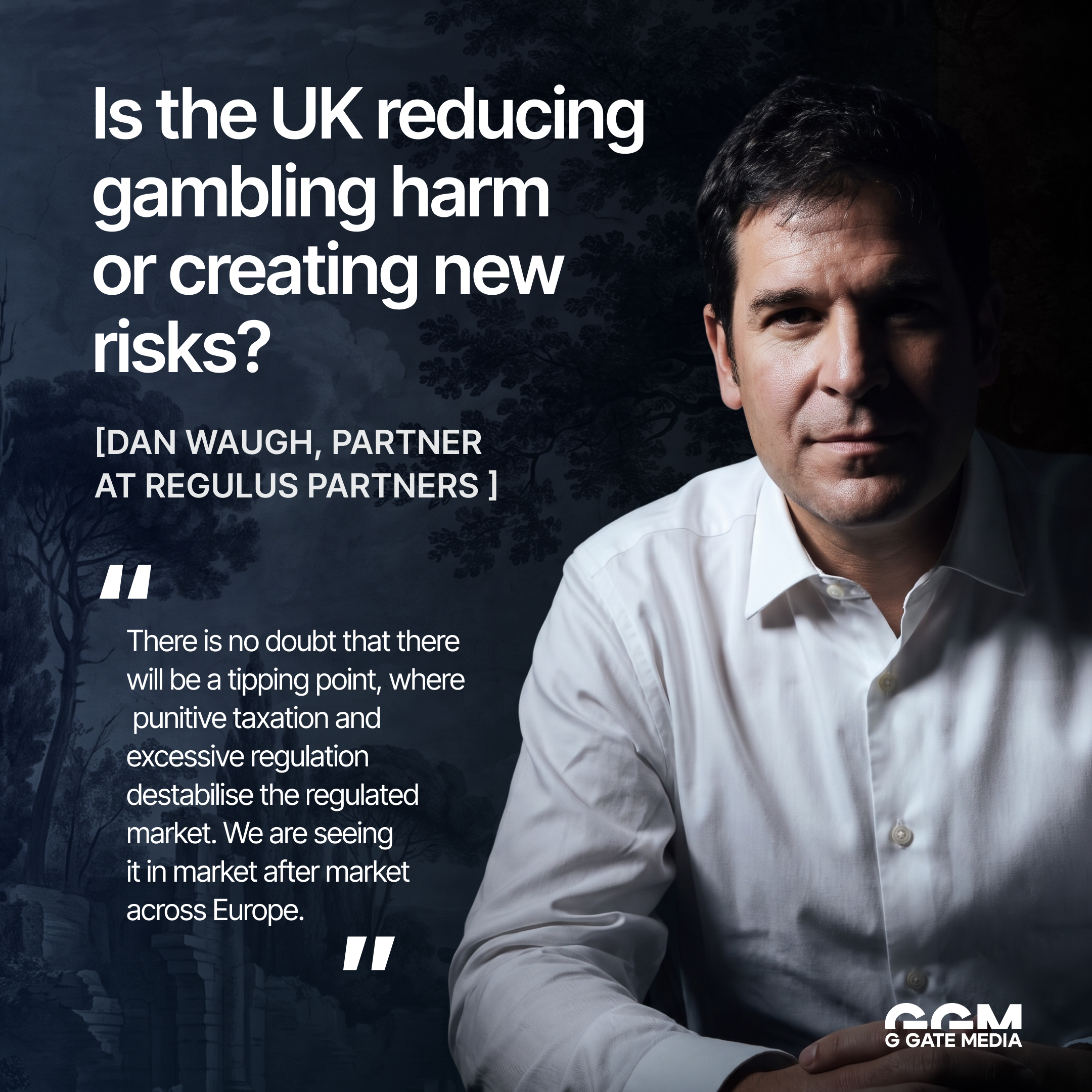
This isn’t just our concern. Dan Waugh, Partner at Regulus Partners, believes the cumulative impact of higher taxes and tighter regulation is becoming impossible to ignore. As he puts it,
“There is no doubt that there will be a tipping point, where punitive taxation and excessive regulation destabilise the regulated market. We are seeing it in market after market across Europe.”
His point is that policymakers should be mindful of where the current trajectory could lead.
The debate is already intensifying. The Social Market Foundation (SMF) recently argued that gambling taxes should go even further, estimating that raising Machine Games Duty to 40% could generate up to £458 million in additional revenue.
But industry groups strongly disagree.
Bacta warned that such a move could “devastate high streets” and push players toward illegal operators. At the same time, the Betting and Gaming Council (BGC) continues to argue that tax policy should protect consumers without weakening the licensed market.
The challenge for policymakers is finding that balance before regulation begins to undermine its own objectives.
Players Are Getting Pushed Offshore
A Frontier Economics study estimates that £2.7 billion is staked annually with unregulated online operators in Great Britain, while one in 12 gamblers already uses black market sites. The biggest drivers are better bonuses, easier account creation, and lower deposit limits.
The regulator appears to recognise the growing challenge. The UK Gambling Commission has created a new Head of Illegal Markets role to lead enforcement, intelligence gathering, and cross-border action against unlicensed operators. The position reflects the Commission’s increasing focus on tackling illegal gambling and strengthening cooperation with operators and technology platforms.
We don’t think taxes alone explain this trend. But they do widen the commercial gap between licensed and unlicensed operators.
Offshore Operators Don’t Need Better Products: Just Fewer Rules
Players find offshore gambling sites attractive because of easier registration, lower deposits, higher withdrawal limits, and bigger bonuses. They value that more than the security that comes with the UKGC.
Additionally, offshore casinos don’t face the same tax burden, affordability checks, or compliance requirements as UK-licensed operators. That leeway gives them greater flexibility to offer larger bonuses, faster sign-ups, fewer verification checks, and quicker withdrawals.
Many also accept cryptocurrencies and alternative payment methods that are really convenient for players of a certain profile.
And the truth is simple: licensed operators can’t compete on the same terms. They must follow stricter advertising rules, responsible gambling measures, and customer verification requirements.
It’s the different rules of the game that cause the real imbalance. The issue isn’t product quality as much as it’s the cost of competing inside one regulatory framework while others operate outside it.
A Higher Tax Could Strengthen Bigger Operators
Higher taxes impact every operator differently. Large companies such as bet365, BetMGM, and LeoVegas have the financial scale to absorb rising costs. Smaller operators don’t.
Instead of cutting core operations, larger businesses can easily automate more internal processes and renegotiate supplier agreements. Also, reducing lower-performing marketing channels and spreading higher costs across multiple markets are on the table, too.
Smaller brands face tougher decisions. That means reducing marketing and affiliate budgets, exiting the UK market, and even applying for licences in lower-cost jurisdictions. Some also might consider acquisition opportunities.
As Flutter Entertainment CEO Peter Jackson recently said, “we continue to adapt to an evolving regulatory landscape.” That mindset is much easier for a global operator than for a business with limited resources.
This is the biggest long-term implication of the tax reforms.
The UK Market Outlook: Three Possible Scenarios
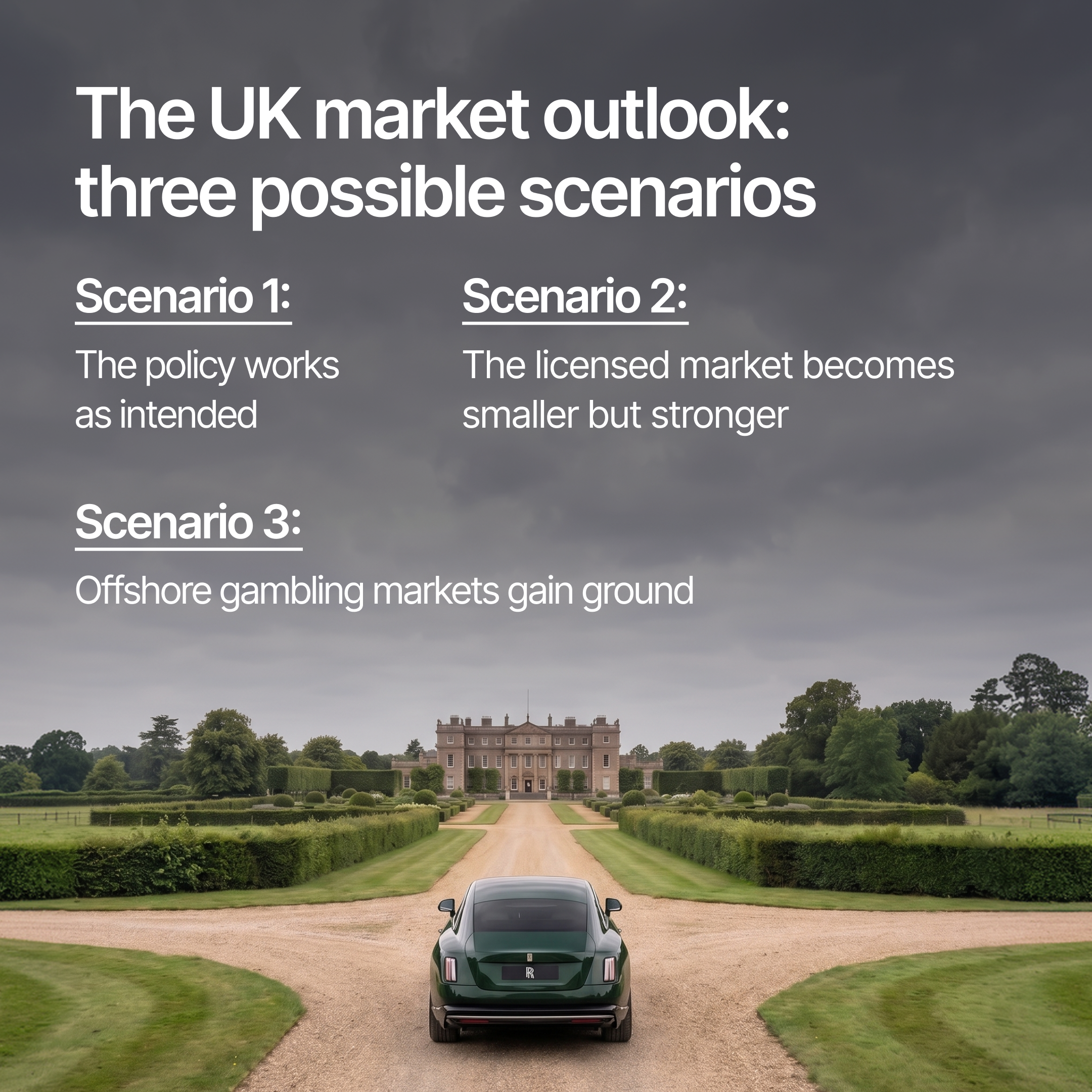
It’s still too early to judge if the UK’s gambling tax reforms will achieve their intended goals. But, the way I see it, there are three possible scenarios:
Scenario 1: The Policy Works as Intended
This is the outcome policymakers are aiming for. Licensed operators take on greater responsibilities, improve efficiency, and continue investing in safer gambling. Government tax revenue increases, while player migration to offshore sites remains limited.
Consumers continue to trust licensed brands, even if bonuses become less generous. Everything worked out as intended.
Scenario 2: The Licensed Market Becomes Smaller but Stronger
Higher taxes put pressure on margins, especially for smaller operators. Marketing budgets shrink, bonus offers become less generous, and lower-margin products disappear.
The largest operators continue to grow thanks to their scale and better balance sheets. Smaller brands either consolidate, move into other markets, or leave the UK altogether. The market stabilises, but with fewer competitors.
Scenario 3: Offshore Gambling Markets Gain Ground
This is the scenario the industry wants to avoid. As licensed operators become less competitive, more value-driven players begin exploring offshore alternatives.
The shift may start gradually. Better bonuses, fewer verification checks, crypto payments, and faster onboarding could become enough to persuade some players to switch. If that trend accelerates, the UK risks collecting less tax while also reducing the number of players protected by its regulatory framework.
Final Thoughts
The UK’s gambling tax reforms will change the market; that’s for sure. Higher duties will strengthen consumer protection and increase public revenue, but they also raise the cost of doing business.
The largest operators are well positioned to adapt. Smaller brands face much tougher choices. I think the long-term success of these reforms will depend on one thing: keeping the regulated market attractive enough for players to continue choosing it.