The Future of B2B Events: Why Physical Booths Are Turning into Immersive Environments?
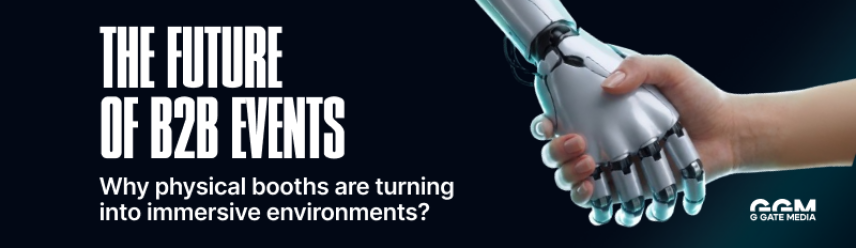


The era of “static” exhibition setups has officially come to an end.
When our team organized G GATE CONF 2026, one thing became clear: people are tired of generic booths with glowing logos. Nobody just wants to watch a slide deck—everyone wants to step inside the story.
Event production is evolving rapidly. Here are three tech trends that we at G GATE MEDIA believe will very soon redefine trade shows and conferences:
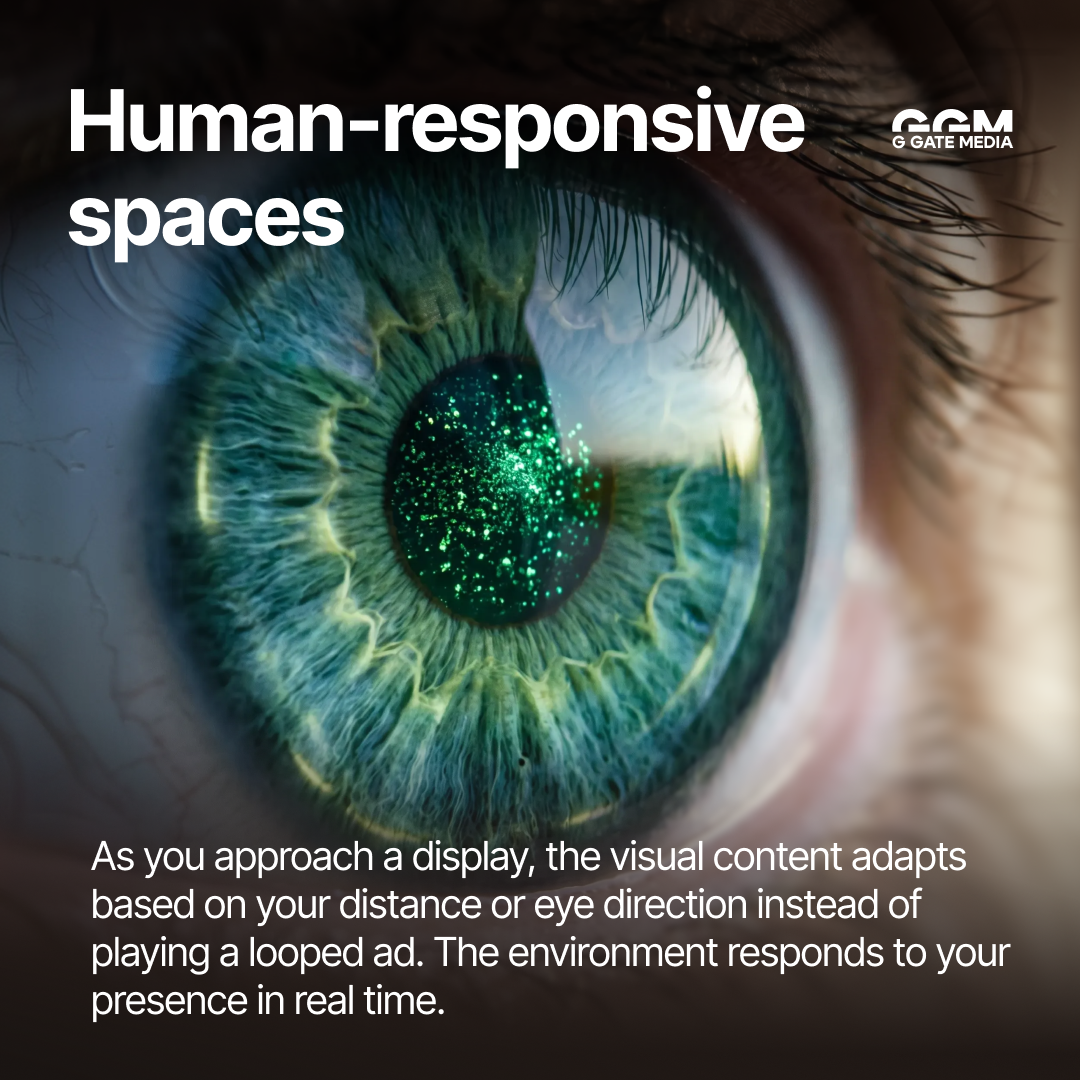
- Human-Responsive Spaces: As you approach a display, the visual content adapts based on your distance or eye direction instead of playing a looped ad. The environment responds to your presence in real time.
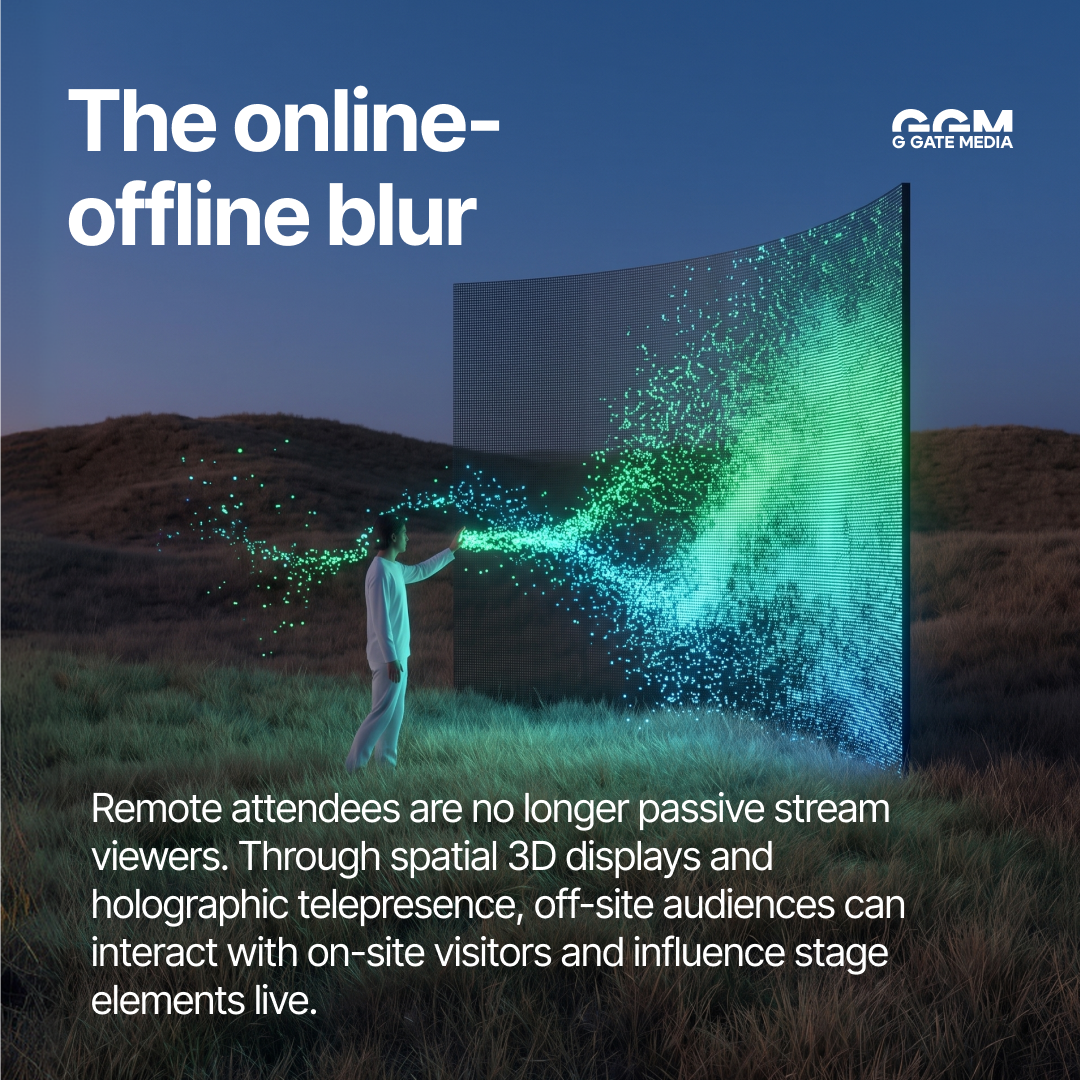
- The Online-Offline Blur: Remote attendees are no longer passive stream viewers. Through spatial 3D displays and holographic telepresence, off-site audiences can interact with on-site visitors and influence stage elements live.
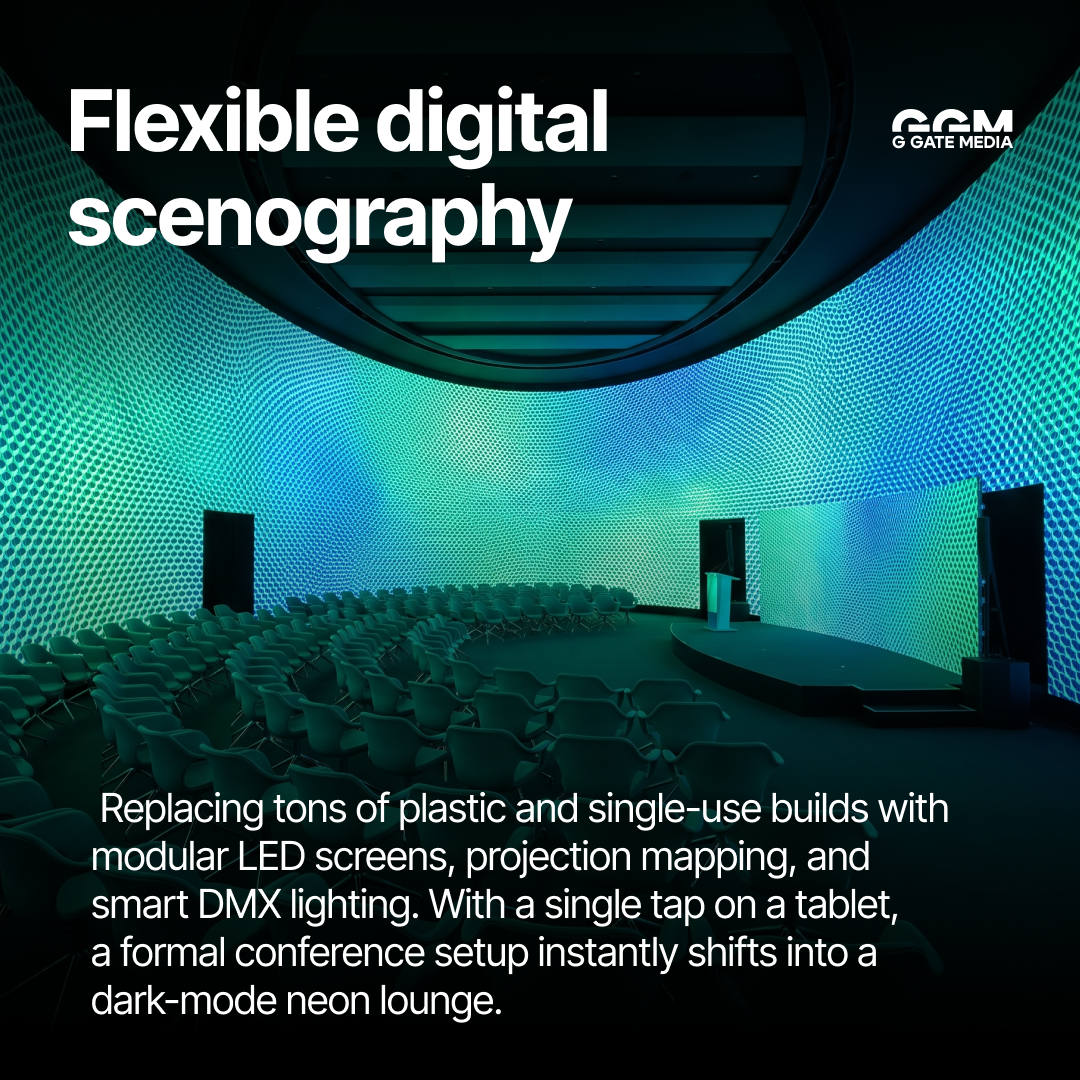
- Flexible Digital Scenography: Replacing tons of plastic and single-use builds with modular LED screens, projection mapping, and smart DMX lighting. With a single tap on a tablet, a formal conference setup instantly shifts into a dark-mode neon lounge.
At G GATE MEDIA, we see modern event spaces as more than physical setups. They should create content, keep audiences engaged, and extend the event’s impact across social channels long after it ends.