The Psychology of Blackjack: Why Math Beats Emotion

Ever wondered why people lose at blackjack even when they know the rules inside out?
It all comes down to psychology. The math behind the game is simple, but over time, players are really competing against their own brains.
Here are three major traps every beginner falls for:
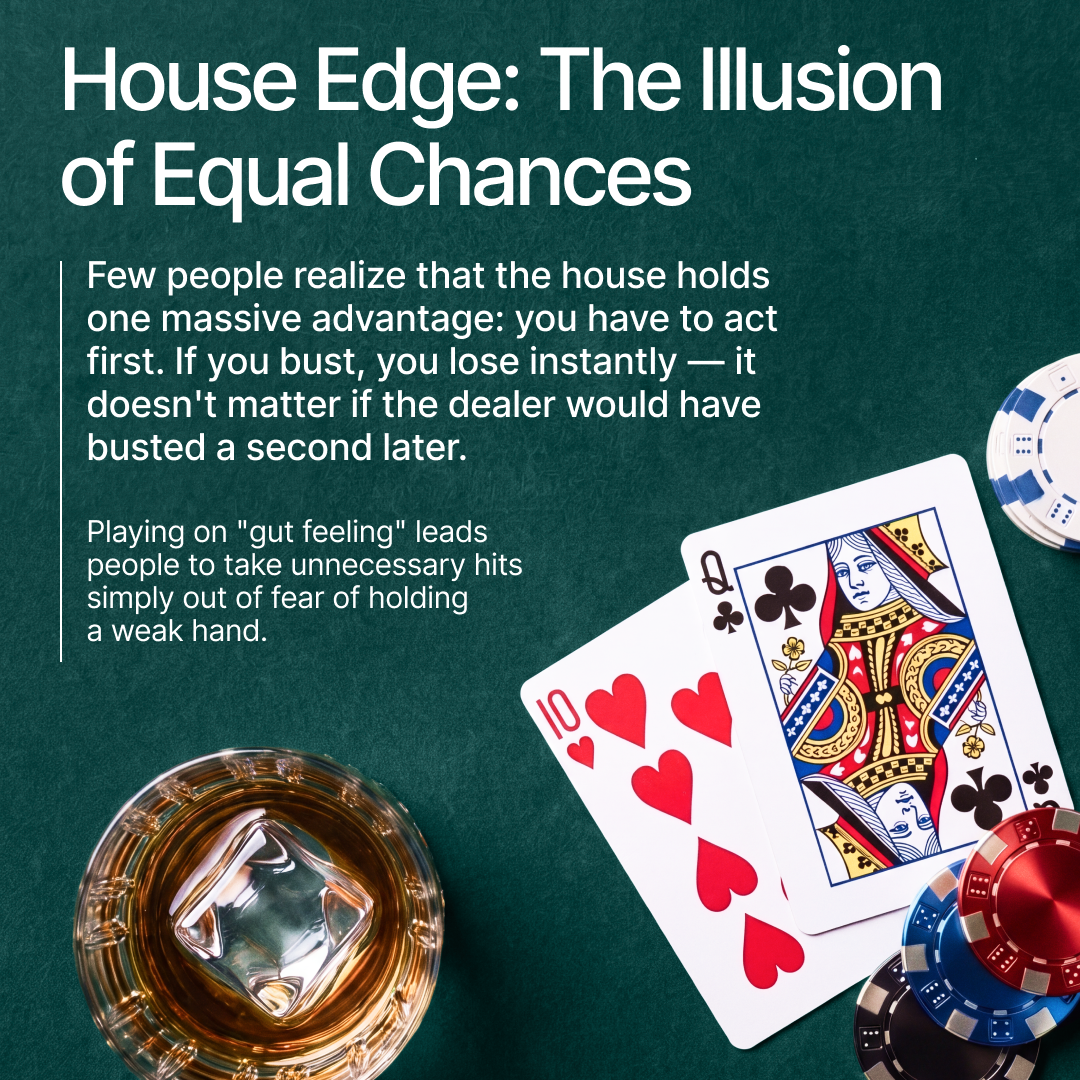
- House Edge: The Illusion of Equal Chances
Few people realize that the house holds one massive advantage: you have to act first. If you bust, you lose instantly—it doesn’t matter if the dealer would have busted a second later. Playing on “gut feeling” leads people to take unnecessary hits simply out of fear of holding a weak hand.
- Basic Strategy: Gut Feeling vs. Logic
A mathematical cheat sheet for blackjack was solved decades ago, telling you exactly when to hit or stand. But at the table, emotions take over: doubling down feels terrifying, and standing on a hard 12 feels wrong—even when math proves it’s the only correct move.
- Player Longevity: The Urge to Chase Losses
Hit a streak of three or four losses? Frustration and tilt kick in. The urge to double your bet and win it all back in one hand is overwhelming. That’s when players can quickly lose their entire bankroll.
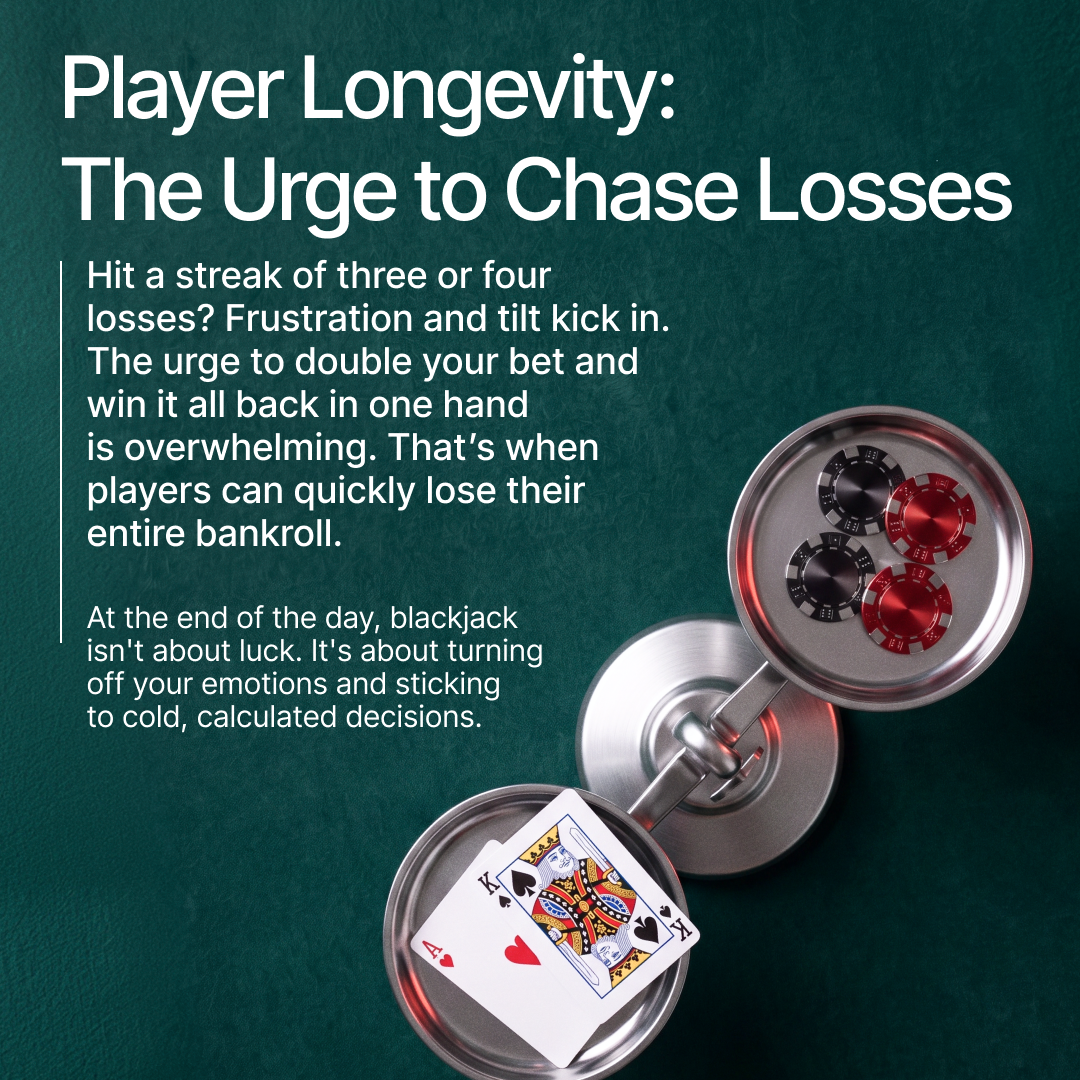
At the end of the day, blackjack isn’t about luck. It’s about turning off your emotions and sticking to cold, calculated decisions.
And yet, the cheat sheet with every optimal move isn’t a secret—it’s freely available online. Yet casinos still make billions. Knowing what to do and actually doing it under emotional pressure are two entirely different skill sets.